JellyBlue Official Website › Ingredients
IngredientsJellyBlue Ingredients: Seven Actives, Seven Printed Amounts
Seven actives carry a milligram on the printed JellyBlue panel: tongkat ali 200 mg, maca root, ashwagandha and horny goat weed at 100 mg each, then L-arginine HCl, beet root and grape seed at 50 mg. That is 650 mg a gummy. The advertising names six of the seven and leaves out beet root.
Every line on the panel, what it is, and the amount the published trials used beside the amount on the bottle.
The two lists of JellyBlue ingredients, and which one to believe
Before the ingredients themselves, the count. The product states what is in the bottle twice, once in the seller’s advertising and once on the printed panel, and the two do not agree. It is worth two minutes because it decides which document a buyer should be reading.
| Where it is printed | What it says | What it lists |
|---|---|---|
| The seller’s sales page | six named ingredients | Tongkat ali, maca root, ashwagandha, horny goat weed, L-arginine HCl and grape seed extract. No amount against any of them, and no beet root. |
| The printed Supplement Facts panel | seven actives, with milligrams | The six above plus beet root extract at 50 mg, and a figure beside every one of them. This is the regulated statement on the container. |
The panel is the regulated statement on the container and the only one of the two carrying amounts, so where they disagree this website prints the panel.
The panel is the one to work from. It is printed on the container that arrives, it is the statement the manufacturer is answerable for, and it is the only one of the two that carries amounts. Everything below is built from it.
The seven JellyBlue actives, one at a time
Largest amount first, which is the order the panel itself uses for the botanicals.
Tongkat Ali
Eurycoma longifolia200 mgThe largest single amount on this panel, and the one the whole formula is built around: 200 mg is nearly a third of the 650 mg of actives in a gummy. A Malaysian root, used there as a tonic long before anyone ran a trial on it, and one of very few botanicals in this category with a modern randomised record. Set beside the trials: a 2022 meta-analysis of tongkat ali trials pooled clinical trials of standardised extract and reported a rise in serum total testosterone; the arms it drew on ran 200 to 400 mg a day. A six-month randomised trial in older men gave 400 mg a day to men with age-related androgen decline. So 200 mg sits at the bottom of the studied range rather than outside it, which is not true of anything else on this label. The standing pharmacology and toxicology review of tongkat ali is the reference summary of what the root is and how it has been tested.
Maca Root
Lepidium meyenii100 mgA cruciferous root grown above 4,000 metres in the Peruvian Andes, eaten there as a food - which is the first thing to know about the amount, because food-scale use is what the trials copied. Set beside the trials: the 12-week maca trial in healthy men gave 1,500 mg and 3,000 mg a day for twelve weeks and reported improved self-rated sexual desire from week eight, with no change in serum testosterone or oestradiol - a finding worth keeping, because it means maca is not on this label as a hormone ingredient whatever the sales page implies. A systematic review of the maca trials reached the same cautious conclusion across the literature. A 12-week trial of black and red maca ran 3,000 mg a day. Against a floor of 1,500 mg, 100 mg is a fifteenth of the smallest amount anybody has studied.
Ashwagandha
Withania somnifera100 mgThe classical Ayurvedic adaptogen and the best-researched name on the panel, included here for the reason it is usually included: for a great many men in their forties the thing draining the tank is chronic stress and short sleep rather than anything a botanical addresses directly. Note the panel spells it “Ashwaganda”. Set beside the trials: an eight-week ashwagandha trial in overweight men aged 40 to 70 gave 600 mg a day of a standardised root extract. A randomised trial of ashwagandha in stressed adults used 240 mg a day for sixty days, and it is the lowest daily amount in this literature with a result attached. A meta-analysis of ashwagandha's hormonal effects pools the trials that measured hormones. At 100 mg the gummy is between two and a half and six times short, and extract strength is not stated, so even that ratio is a best case rather than a measurement.
Horny Goat Weed
Epimedium sagittatum100 mgThe botanical this category is named for as often as not, and the one with the widest gap between reputation and evidence. Its marker compound, icariin, is genuinely interesting in the laboratory. What does not exist is a randomised human trial of the herb for this use case to point a reader at, and it would be dishonest to imply otherwise. The panel spells it “Horney goat weed”. What does exist is the standardisation work on Epimedium, and its finding is the practical one - content varies enormously between species and between batches, so “100 mg of Epimedium extract” does not describe a fixed quantity of anything. This is also the ingredient behind the interaction note on the side effects page.
L-Arginine HCl
an amino acid, not a botanical50 mgFirst on the panel, and the ingredient the sales copy leans on hardest for its blood-flow story, because the nitric-oxide story is easy to tell. L-arginine is a precursor the body converts to nitric oxide, which relaxes the smooth muscle in blood-vessel walls. The chemistry is real. The amount is the problem. Set beside the trials: the arms pooled in a network meta-analysis of supplement ingredients for erectile function run from 1,500 mg to 5,000 mg a day. Fifty milligrams is a thirtieth of the bottom of that range and a hundredth of the top. Arginine is also an ordinary part of any protein-containing meal, so whatever this gummy does, it is not doing it through its arginine line.
Beet Root
Beta vulgaris50 mgThe ingredient the advertising leaves out. Beet root is on the printed panel at 50 mg and appears nowhere in the seller’s ingredient list or on its sales page. It is also, by a distance, the ingredient on this label whose pathway to blood flow has been measured most often in people: dietary nitrate from beet is reduced to nitrite by microbes that live at the back of the tongue, and that nitrite becomes nitric oxide once it is in the bloodstream - the same end point the L-arginine paragraph above is selling, reached by a route that works at food doses. Set beside the trials: the beetroot juice trial that opened this literature gave 500 mL of beetroot juice, roughly 22.5 mmol of nitrate, and measured a fall in blood pressure within hours. A meta-analysis of beetroot nitrate and blood pressure and a 2026 meta-analysis of longer-term nitrate supplementation pool the trials that followed, most of which sit around 5 to 6 mmol a day. Those are juice-glass and concentrate amounts; 50 mg of an extract of unstated strength does not reach them. The interesting thing is not that the amount is small - most of them are - but that the best-evidenced name on the bottle is the one the marketing department dropped.
Grape Seed
Vitis vinifera50 mgThe last line on the panel and the quietest ingredient in the formula. Grape seed carries oligomeric proanthocyanidins, polyphenols studied mostly for what they do to the lining of blood vessels rather than for anything about drive or energy. Set beside the trials: a dose-response meta-analysis of grape seed extract pooled controlled trials measuring flow-mediated dilation, blood pressure and heart rate; a meta-analysis of sixteen grape seed trials looks at blood pressure alone. The arms in both run from 100 to 800 mg a day, with most clustered between 150 and 300. At 50 mg this is between a half and a sixteenth of a studied amount, and it is here for the same reason grape seed is on a hundred other labels: it is cheap, it is well tolerated, and it reads well on a list.
Honest dosage analysis: the JellyBlue panel against the trials
One row matches, one is within reach, four are far below, and one cannot be compared at all. That is the formula in a sentence, and it is a more useful summary than any adjective.
It is also worth saying what this table is not. It is not an accusation: nothing obliges a supplement to match a clinical trial, and nothing about a trial amount makes it the right amount for a daily product taken for months. What the table does is let a reader price the difference themselves rather than take anybody's word for the word “clinically dosed”.
Tongkat ali, 200 mg. It is 31 per cent of the active weight in the gummy, it sits inside the range of the trials pooled in the 2022 meta-analysis, and it is the only line here about which that can be said. If you are buying this product, that is what you are buying.
What else is in a JellyBlue gummy besides the actives
A gummy is mostly not its actives, and this one is no exception. The other-ingredients line reads: Cane sugar, glucose syrup, water, pectin, citric acid, sodium citrate, natural flavor, natural coloring, starch.
| What it is | Why it is there |
|---|---|
| Cane sugar, glucose syrup | The sweetness and the body of the gummy. Together they account for the 2 g of carbohydrate and the 1.5 g of sugar per piece. |
| Pectin | The gel. Pectin comes from fruit rather than from animal collagen, so this is a gelatin-free gummy. Neither the label nor the seller goes on to make a vegetarian claim, so this website does not either. |
| Citric acid, sodium citrate | Acidity and its buffer. They set the tartness that carries a blue raspberry flavour and they help the pectin set. |
| Natural flavor, natural coloring | The blue raspberry. Neither is specified further, which is normal and is also the reason anyone with a flavouring sensitivity should ask before buying. |
| Starch | A processing aid, usually a dusting to stop the pieces sticking to each other in the bottle. |
| Water | The solvent the whole thing is made in. |
Nothing on that list is unusual or objectionable and nothing on it is active. It is worth reading for one reason: it tells you that the 650 mg of extract is riding in a sweet, acidic, fruit-pectin base, and that a chewable taken daily should be followed by the glass of water the label asks for.
What is not in a JellyBlue gummy
Two absences are worth stating plainly, because in this category both are occasionally present and neither should be.
No stimulant
There is no caffeine, no yohimbine and no synephrine on this panel. That is why nothing is felt on the same day and why the label does not ask you to take it in the morning. A gummy with a stimulant in it would feel like something within an hour, and this one will not.
No undeclared drug analogue, and how you would know
The most serious failure mode in this category is a supplement spiked with an unapproved sildenafil or tadalafil analogue. A fifteen-year analysis of one adulterated vitality supplement follows one product through successive spikes from 2007 to 2022, and the FDA's sexual enhancement product notifications are the federal record of products found to contain them. The defence available to a buyer is mundane: buy from a desk that can match a lot number, keep the bottle, and keep the order email. Lot JEL-26/JE-6782 is checkable on our batch page.
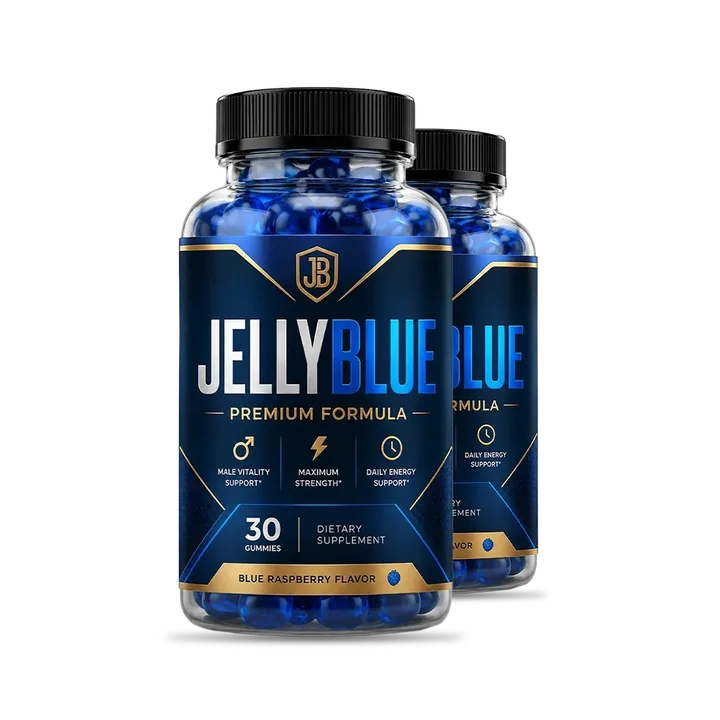
Order JellyBlue and read the panel yourself
The bottle that arrives carries the panel transcribed on this page. Compare the two, and if the bottle is not what you expected the 60-day window starts at purchase.
Two bottles $158 · three bottles $207 · 60-day money-back guarantee
Order JellyBlue On The Official Website30 gummies a bottle · lot JEL-26/JE-6782 · ships from the U.S.
Who publishes this JellyBlue website?
Each source below is cited in a sentence on this page.
- Leisegang K, Finelli R, Sikka SC, Panner Selvam MK. Eurycoma longifolia (Jack) improves serum total testosterone in men: a systematic review and meta-analysis of clinical trials. Medicina (Kaunas). 2022;58(8):1047. PMID 36013514. https://pubmed.ncbi.nlm.nih.gov/36013514/
- Leitão AE, Vieira MCS, Pelegrini A, da Silva EL, Guimarães ACA. A 6-month, double-blind, placebo-controlled, randomized trial to evaluate the effect of Eurycoma longifolia (Tongkat Ali) and concurrent training on erectile function and testosterone levels in androgen deficiency of aging males (ADAM). Maturitas. 2021;145:78-85. PMID 33541567. https://pubmed.ncbi.nlm.nih.gov/33541567/
- Rehman SU, Choe K, Yoo HH. Review on a traditional herbal medicine, Eurycoma longifolia Jack (Tongkat Ali): its traditional uses, chemistry, evidence-based pharmacology and toxicology. Molecules. 2016;21(3):331. PMID 26978330. https://pubmed.ncbi.nlm.nih.gov/26978330/
- Gonzales GF, Córdova A, Vega K, et al. Effect of Lepidium meyenii (MACA) on sexual desire and its absent relationship with serum testosterone levels in adult healthy men. Andrologia. 2002;34(6):367-72. PMID 12472620. https://pubmed.ncbi.nlm.nih.gov/12472620/
- Shin BC, Lee MS, Yang EJ, Lim HS, Ernst E. Maca (L. meyenii) for improving sexual function: a systematic review. BMC Complement Altern Med. 2010;10:44. PMID 20691074. https://pubmed.ncbi.nlm.nih.gov/20691074/
- Gonzales-Arimborgo C, Yupanqui I, Montero E, et al. Acceptability, safety, and efficacy of oral administration of extracts of black or red maca (Lepidium meyenii) in adult human subjects: a randomized, double-blind, placebo-controlled study. Pharmaceuticals (Basel). 2016;9(3):49. PMID 27548190. https://pubmed.ncbi.nlm.nih.gov/27548190/
- Lopresti AL, Drummond PD, Smith SJ. A randomized, double-blind, placebo-controlled, crossover study examining the hormonal and vitality effects of ashwagandha (Withania somnifera) in aging, overweight males. Am J Mens Health. 2019;13(2):1557988319835985. PMID 30854916. https://pubmed.ncbi.nlm.nih.gov/30854916/
- Fornalik M, Malkiewicz A, Adamczak D, et al. Hormonal modulation with Withania somnifera: systematic review and meta-analysis of randomized-controlled trials. Planta Med. 2026;92(8):790-805. PMID 41740946. https://pubmed.ncbi.nlm.nih.gov/41740946/
- Smith SJ, Lopresti AL, Fairchild TJ. Exploring the efficacy and safety of a novel standardized ashwagandha (Withania somnifera) root extract in adults experiencing high stress and fatigue in a randomized, double-blind, placebo-controlled trial. J Psychopharmacol. 2023;37(11):1091-1104. PMID 37740662. https://pubmed.ncbi.nlm.nih.gov/37740662/
- Yong EL, Wong SP, Shen P, et al. Standardization and evaluation of botanical mixtures: lessons from a traditional Chinese herb, Epimedium, with oestrogenic properties. Novartis Found Symp. 2007;282:173-88. PMID 17913231. https://pubmed.ncbi.nlm.nih.gov/17913231/
- Barbonetti A, Tienforti D, Antolini F, et al. Nutraceutical interventions for erectile dysfunction: a systematic review and network meta-analysis. J Sex Med. 2024;21(11):1054-1063. PMID 39279185. https://pubmed.ncbi.nlm.nih.gov/39279185/
- Webb AJ, Patel N, Loukogeorgakis S, et al. Acute blood pressure lowering, vasoprotective, and antiplatelet properties of dietary nitrate via bioconversion to nitrite. Hypertension. 2008;51(3):784-90. PMID 18250365. https://pubmed.ncbi.nlm.nih.gov/18250365/
- Benjamim CJR, Porto AA, Valenti VE, et al. Nitrate derived from beetroot juice lowers blood pressure in patients with arterial hypertension: a systematic review and meta-analysis. Front Nutr. 2022;9:823039. PMID 35369064. https://pubmed.ncbi.nlm.nih.gov/35369064/
- Forster D, Waclawovsky G, Stefani GP. Effects of chronic nitrate supplementation on blood pressure in adults: a systematic review and meta-analysis of randomized clinical trials. Nutr Res. 2026;146:111-120. PMID 41619653. https://pubmed.ncbi.nlm.nih.gov/41619653/
- Foshati S, Nouripour F, Sadeghi E, Amani R. The effect of grape (Vitis vinifera) seed extract supplementation on flow-mediated dilation, blood pressure, and heart rate: a systematic review and meta-analysis of controlled trials with duration- and dose-response analysis. Pharmacol Res. 2022;175:105905. PMID 34798267. https://pubmed.ncbi.nlm.nih.gov/34798267/
- Zhang H, Liu S, Li L, et al. The impact of grape seed extract treatment on blood pressure changes: a meta-analysis of 16 randomized controlled trials. Medicine (Baltimore). 2016;95(33):e4247. PMID 27537554. https://pubmed.ncbi.nlm.nih.gov/27537554/
- Balayssac S, Danoun S, Gilard V, Martino R, Malet-Martino M. The POWER saga from 2007 to 2022: an example of a sexual enhancement dietary supplement tainted by different adulterants and still on the market. J Pharm Biomed Anal. 2023;227:115283. PMID 36780864. https://pubmed.ncbi.nlm.nih.gov/36780864/
- U.S. Food and Drug Administration. Sexual Enhancement and Energy Product Notifications. Accessed 21 September 2026. https://www.fda.gov/drugs/medication-health-fraud-notifications/sexual-enhancement-and-energy-product-notifications