JellyBlue Official Website › Journal › One number, examined
JournalWhat 200 mg Of Tongkat Ali Is Actually Worth
Two hundred milligrams of tongkat ali is at the foot of the range used by the trials pooled in a 2022 meta-analysis, which makes it the one properly sized line on this panel. What holds the claim back is that no extract ratio is stated, so the weight matches the trials and the material may not.
Most of what is written about supplement dosing is a complaint. A label carries an ingredient at a tenth of its studied amount, somebody points that out, and everybody moves on. It is a fair complaint and it is also a boring one, because it is true of almost every multi-ingredient product on the market.
The more interesting case is the opposite one: a line on a panel that is actually inside the range its own trials used. This is what that is worth, and what still sits between it and a promise.
Two hundred milligrams, and where that number comes from
Tongkat ali, Eurycoma longifolia, is a Malaysian root with a long history of traditional use and, unusually for this aisle, a modern randomised record.
A 2022 meta-analysis of tongkat ali trials, a systematic review of the clinical record, pooled the trials measuring serum total testosterone in men and reported an increase. The arms it drew on ran between 200 and 400 mg a day of standardised extract. A six-month randomised trial in older men gave 400 mg a day to men with age-related androgen decline, with and without a training programme.
So when a panel carries 200 mg of tongkat ali, it is at the foot of a studied range rather than outside it. On a seven-ingredient label where five lines are an order of magnitude below anything measured, that is worth noticing.
| What | The figure | Comment |
|---|---|---|
| On the panel | 200 mg | The largest single line, and 31% of the actives. |
| Trials pooled in the 2022 meta-analysis | 200-400 mg/day | The panel figure is at the bottom of this range. |
| The six-month trial | 400 mg/day | Double the panel figure. |
| Typical single-ingredient capsule | 200-600 mg | What you would buy if you wanted this ingredient alone. |
| The other six lines on this panel | 50-100 mg each | All below their own studied amounts, four of them far below. |
The middle column is read from the abstracts of the papers named. The comments are this desk's.
What an unstated extract ratio takes back
Here is the thing that stops this being a clean win, and it applies to almost every botanical label in every aisle.
“Tongkat ali extract, 200 mg” does not say what the extract is. A plant extract is made by pulling compounds out of dried material with a solvent and concentrating what comes out, and the concentration factor is expressed as a ratio: 10:1 means ten kilograms of root produced one kilogram of extract.
A trial does not test “tongkat ali”. It tests a specific preparation, usually a water extract standardised to a stated percentage of eurycomanone or a named commercial ingredient. Two hundred milligrams of that is a defined quantity. Two hundred milligrams of an unspecified extract is a weight of powder.
The honest summary is therefore narrower than a headline: the panel figure matches the trial figure, and whether the material matches is unknown. That is still better than a label an order of magnitude short, and it is a long way from a clinical claim.
A ratio and a standardisation on the panel: “tongkat ali extract 200 mg (100:1, standardised to 2% eurycomanone)”. That single addition would do more for a label in this category than every badge on the front of the box put together, and it costs a manufacturer nothing but candour.
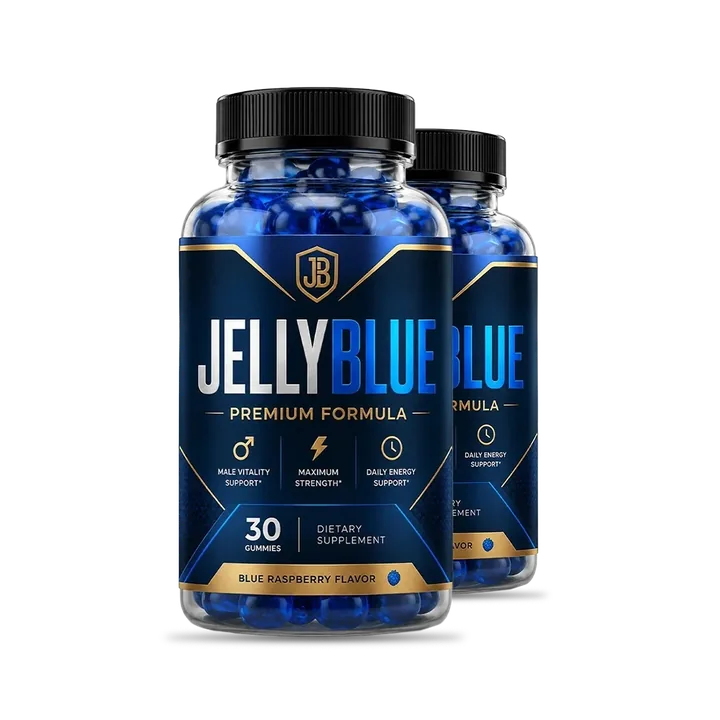
Order JellyBlue for the line that is actually dosed
Tongkat ali at 200 mg is at the foot of its own trial range, which is more than most panels in this aisle can say. The other six lines are set out beside their trial amounts too.
Two bottles $158 · three bottles $207 · 60-day money-back guarantee
Order JellyBlue On The Official Website30 gummies a bottle · lot JEL-26/JE-6782 · ships from the U.S.
What the trials measured, and what they did not
It is worth being precise about the endpoint, because “raises testosterone” is doing a great deal of unexamined work in the advertising for this ingredient.
The pooled analysis measured serum total testosterone. That is a blood concentration. It is not the same thing as energy, mood, drive, muscle or any of the outcomes a supplement page promises, and the relationship between a modest change in a blood concentration within the normal range and how a man feels on a Tuesday is not simple.
A 2026 meta-analysis of herbal supplements in this category, which pools the randomised trials across the whole herbal shelf, is a useful corrective: the evidence base as a whole is thinner and noisier than any individual product page implies.
The standing pharmacology and toxicology review of tongkat ali, which also covers the root’s chemistry and traditional use, is the right place to start for anyone who wants the ingredient rather than the brand.
What a standardisation actually is
Two words appear on good botanical labels and are absent from most: the ratio, and the standardisation. They are not the same thing and both are worth understanding, because between them they are the whole of what a milligram on a botanical panel means.
The ratio describes concentration. A 10:1 extract means ten units of dried plant material produced one unit of extract. It says how much raw root is behind the powder and nothing at all about what came across in the solvent.
The standardisation describes composition. “Standardised to 2% eurycomanone” means the manufacturer assays each batch for a named marker compound and adjusts until the extract hits the stated figure. It is the difference between a weight of plant powder and a defined quantity of the thing the research was about.
Standardisation is expensive. It requires an assay per batch, it produces rejected material, and it constrains where the raw plant can be bought. That is why it appears on premium single-ingredient products and rarely on seven-ingredient blends, and it is a reasonable proxy for how seriously a manufacturer takes the panel.
| What the label says | What you can conclude | Confidence |
|---|---|---|
| Tongkat ali extract 200 mg | A weight of extract of unknown strength | Low: the weight matches the trials, the material is unknown. |
| Tongkat ali extract 200 mg (10:1) | Concentration stated, composition not | Moderate. |
| Tongkat ali extract 200 mg (100:1, 2% eurycomanone) | A defined quantity of the studied compound | High. |
| Proprietary blend 650 mg | Nothing at all about any single ingredient | None. Not evaluable by anyone. |
Most labels in this category sit on the first or last row. The middle two are what a buyer should be looking for.
Why 200 mg is where formulators stop
There is a practical reason this particular number turns up so often, and it is not that somebody read the meta-analysis.
Tongkat ali extract is one of the more expensive botanicals in this aisle. It is also bitter enough that it fights a chewable base, which matters for a gummy in a way it does not for a capsule. Two hundred milligrams is roughly where cost and palatability meet on a multi-ingredient chewable, and that is why it is a common figure.
The fact that this commercial ceiling happens to coincide with the floor of the studied range is a lucky alignment rather than a design decision, and it is worth understanding as such. If the trials had used two grams, the label would not say two grams; it would say 200 mg and the marketing would still call it clinically dosed.
Which is the general lesson. A number on a panel is a formulation and costing decision first. Whether it also matches the research is something you have to check, one ingredient at a time, and it usually does not.
How to check this claim yourself, on any label
Four steps, and they work on any botanical in any aisle.
- Find the amount on the panel, not the front. The front of a box is not obliged to be complete.
- Search the ingredient plus “randomized” on PubMed. It is free and it takes a minute. Read the abstract, not the headline.
- Find the daily amount in the abstract. It is nearly always in the methods sentence. Write it down.
- Compare, and then ask what the extract was. If the label does not say, the comparison is an upper bound rather than a match.
The verdict on one number
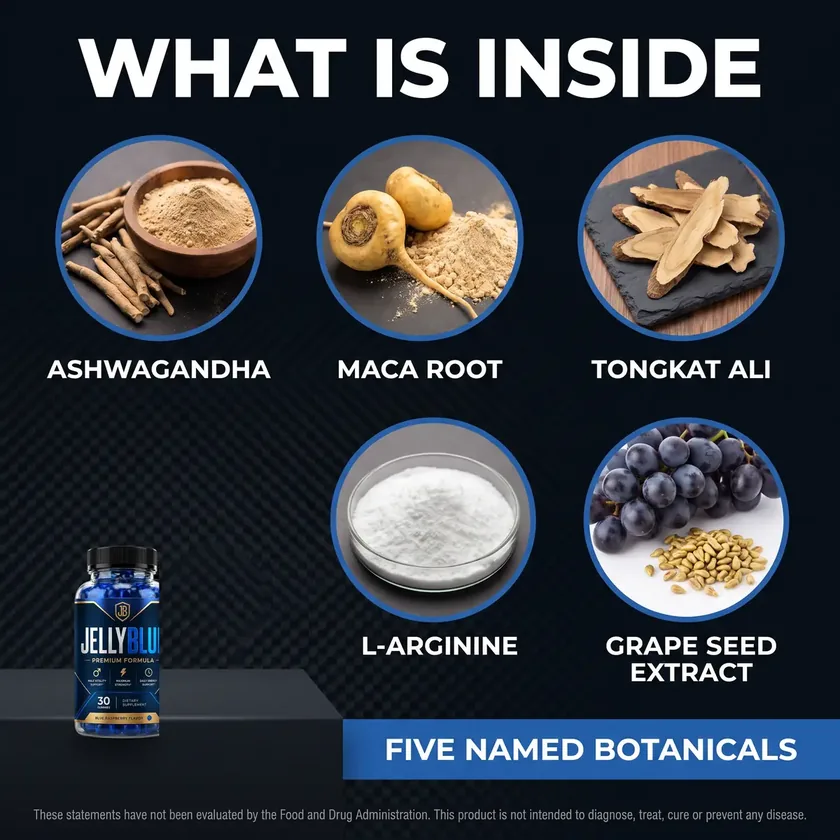
Two hundred milligrams of tongkat ali on a gummy panel is a real formulation decision rather than a decorative one. It is the largest line on the label, it is inside the range of the trials, and it is roughly a third of everything active in the product.
What it is not is proof. The extract is unspecified, the gummy has never been trialled, and a blood concentration is not a feeling. A buyer who understands all three of those and still wants the product is buying it for the right reason: one properly sized ingredient, in a format they will actually take every day, from a seller who prints the number.
That is a modest case, and a modest case stated accurately is worth more than an enormous one stated loosely.
- Leisegang K, Finelli R, Sikka SC, Panner Selvam MK · Eurycoma longifolia (Jack) improves serum total testosterone in men: a systematic review and meta-analysis of clinical trials · Medicina (Kaunas) · 2022;58(8):1047 · PubMed ID 36013514 · https://pubmed.ncbi.nlm.nih.gov/36013514/
- Leitão AE, Vieira MCS, Pelegrini A, da Silva EL, Guimarães ACA · A 6-month, double-blind, placebo-controlled, randomized trial to evaluate the effect of Eurycoma longifolia (Tongkat Ali) and concurrent training on erectile function and testosterone levels in androgen deficiency of aging males (ADAM) · Maturitas · 2021;145:78-85 · PubMed ID 33541567 · https://pubmed.ncbi.nlm.nih.gov/33541567/
- Rehman SU, Choe K, Yoo HH · Review on a traditional herbal medicine, Eurycoma longifolia Jack (Tongkat Ali): its traditional uses, chemistry, evidence-based pharmacology and toxicology · Molecules · 2016;21(3):331 · PubMed ID 26978330 · https://pubmed.ncbi.nlm.nih.gov/26978330/
- Ho CY, Hsu CH, Chien TJ · Herbal dietary supplements for erectile dysfunction: a systematic review and meta-analysis of randomized-controlled trials · J Tradit Complement Med · 2026;16(1):109-120 · PubMed ID 41696741 · https://pubmed.ncbi.nlm.nih.gov/41696741/