JellyBlue Official Website › Journal › A pathway, not a pill
JournalThe Bacteria In Your Mouth Decide Whether Beet Root Works
Beet root's route to an effect runs through bacteria that live on the back of your tongue, which reduce dietary nitrate to nitrite before it can become nitric oxide anywhere else in the body. Antiseptic mouthwash kills those bacteria. In the trial that first measured it directly, a single rinse cut the rise in plasma nitrite after a nitrate load by roughly a quarter and erased the fall in blood pressure entirely — a variable no supplement label mentions, because no label is required to.
Most of what gets written about a supplement's absorption stops at the stomach: does it dissolve, does the liver break it down, does food help or hurt it. Beet root's nitrate line skips that whole conversation and depends instead on something no capsule or gummy label has ever had to disclose — the bacterial population living on your tongue, and whether you rinsed it away this morning.
A gummy is chewed. That turns out to matter here
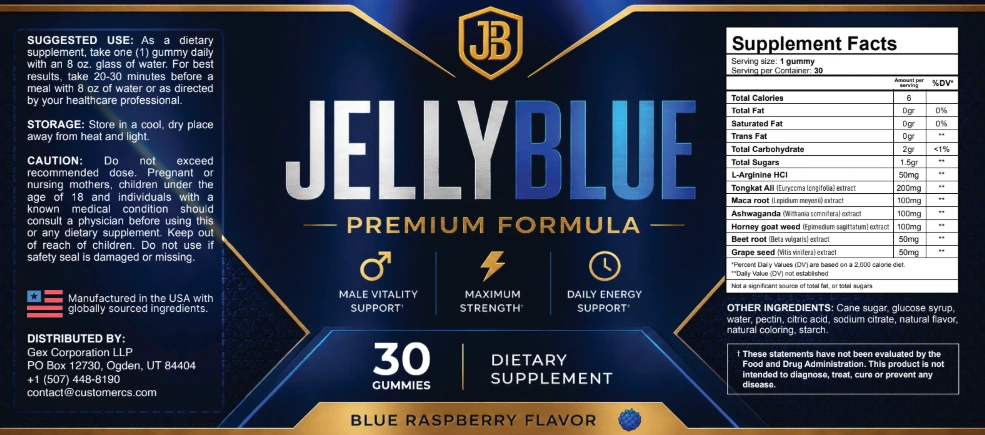
JellyBlue is a chewable gummy, not a capsule, which the printed panel and the how-to-use page both note without making anything of it. For most of the seven actives on this label, the difference between chewing and swallowing whole is cosmetic: the extract dissolves in the stomach either way. For the beet root line specifically, it is not cosmetic, because chewing floods the ingredient directly into the one place its nitrate has to visit before it can do anything: saliva, in contact with the bacteria on the back of the tongue, for longer than a swallowed capsule ever would.
That is not a claim that a gummy makes beet root more effective than the same amount in a capsule would — nobody has run that comparison for this product, and the ingredient's own concentration is unstated on the panel either way. It is a reason the mechanism below is worth reading closely if you are the kind of person who takes this specific ingredient seriously.
The pathway beet root actually depends on
Dietary nitrate, the compound beet root and green leafy vegetables are valued for, is not itself the active molecule. The body has to convert it, and the conversion happens in two steps: nitrate to nitrite, then nitrite to nitric oxide, the short-lived signalling gas that relaxes blood-vessel walls. The first step is the one this piece is about, and it is not done by a human enzyme. It is done by bacteria.
Certain species living in the crypts on the back of the tongue reduce nitrate to nitrite as part of their own metabolism, using an enzyme humans do not make. Swallowed nitrate is absorbed into the bloodstream, actively concentrated back into saliva by the salivary glands, and delivered to those bacteria on every cycle through the mouth — a loop physiologists call the enterosalivary circulation of nitrate. Without it, dietary nitrate mostly passes through unconverted. A 2021 review of the oral microbiome's role in blood pressure and vascular tone lays out the pathway in full and the evidence supporting each step.
What one antiseptic rinse does, measured directly
Because this dependency is testable, several groups have tested it, and the findings are consistent enough to treat as settled physiology rather than a fringe theory.
The earliest direct test, Govoni et al.'s 2008 crossover study, gave seven healthy volunteers a nitrate load with and without a chlorhexidine-based antibacterial mouthwash beforehand. Rinsing had no effect on how much nitrate reached the saliva or blood — the nitrate itself still arrived. What it did was abolish the conversion to nitrite in saliva and markedly blunt the rise in plasma nitrite, exactly the step attributed to oral bacteria.
A companion study the following year, Petersson et al.'s 2009 work in rats, extended the finding past nitrite levels to an actual outcome: nitrate supplementation lowered blood pressure and thickened protective gastric mucus, and a twice-daily antiseptic mouthwash eliminated both effects by killing the oral bacteria that made the conversion possible.
The most cited human confirmation is Kapil et al.'s 2013 trial in nineteen healthy volunteers, which measured clinic, home and 24-hour ambulatory blood pressure across a control week and a week of twice-daily chlorhexidine mouthwash. The mouthwash cut oral nitrite production by 90 percent and plasma nitrite by 25 percent, and systolic and diastolic pressure rose by two to three and a half millimetres of mercury — a small number for one person, but one that tracked the drop in circulating nitrite closely enough to establish cause. The effect appeared within a single day of starting the mouthwash and held for the full week it was used.
How much mouthwash it takes, and how fast it acts
A natural follow-up question is whether every mouthwash does this, or only the strongest ones. Woessner et al.'s 2016 study tested three commercial products — a standard antiseptic rinse, an antibacterial rinse and a chlorhexidine rinse — against water, after a beetroot-juice nitrate load, and found a stepwise effect: the stronger the antibacterial action, the larger the drop in plasma and salivary nitrite, with chlorhexidine cutting it the most and reducing the blood-pressure benefit measurably.
McDonagh et al.'s 2015 trial pushed the question into repeated, chronic use: twelve volunteers rinsed with a strong chlorhexidine mouthwash, a weaker non-chlorhexidine rinse, or water, three times a day for six days while drinking beetroot juice twice daily. The strong rinse suppressed the plasma nitrite rise and increased the blood-pressure rise seen during light exercise; the weaker rinse suppressed nitrite too, just less. Six days of ordinary mouthwash use, in other words, was enough to measurably interfere with a food-based nitrate routine.
Order JellyBlue
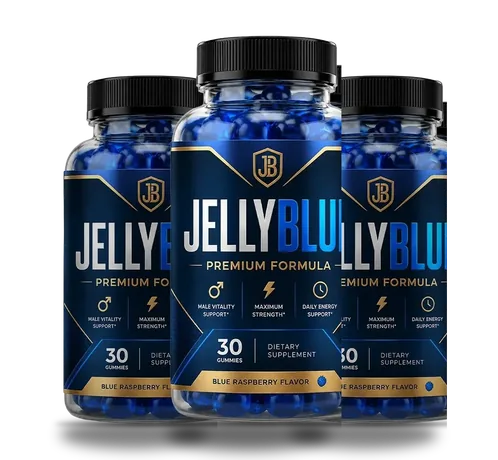
Seven actives with a milligram against each, beet root included. What follows is what happens to that line before it ever reaches your bloodstream.
Two bottles $158 · three bottles $207 · 60-day money-back guarantee
Order JellyBlue30 gummies a bottle · ships from the U.S.
The habit that undoes it without a bottle of mouthwash
Mouthwash is not the only route to the same problem. Tribble et al.'s 2019 study of tongue-cleaning frequency sequenced the tongue microbiome of healthy volunteers and tracked what happened when they used chlorhexidine mouthwash for a week. Frequent tongue cleaning predicted a larger chlorhexidine-driven rise in systolic blood pressure and a bigger shift in tongue bacterial composition; people with higher baseline levels of nitrate-reducing bacteria on the tongue had lower resting systolic pressure to begin with. Scraping the tongue clean, done often enough, turns out to be doing a milder version of what an antiseptic rinse does on purpose.
None of this is an argument against ordinary oral hygiene. It is a reason the pathway is more fragile, and more commonly disrupted by routine habits, than a nutrition label discussing nitrate ever suggests.
A hypothesis that reaches further than blood pressure
The clearest sign that researchers take this pathway seriously is how far outside supplement science the question has travelled. Blot's 2021 review in Intensive Care Medicine starts from an odd observation in hospital cohort studies — patients given antiseptic mouthwash for infection control have higher mortality than those who are not — and proposes that disrupting the same nitrate-nitrite-nitric oxide pathway described above, at a moment when the body's nitric oxide supply is already under strain from illness, could be part of the explanation. The review is explicit that this is a hypothesis rather than a settled finding, but it is a serious one, published because the underlying oral-bacteria mechanism is by now well established enough to build a clinical hypothesis on.
What this means for 50 mg of beet root extract
None of the eight studies above changes the arithmetic already laid out on this website's ingredients page, or in the journal's earlier piece on beet root's missing place in the advertising: fifty milligrams of an extract of unstated concentration is well short of the five-to-six-millimole nitrate doses the blood-pressure trials used, and nothing here makes that gap smaller.
What this piece adds is a second, independent reason the beet root line might do less than its milligram figure implies, on top of the dose gap. Even a full trial-scale dose of dietary nitrate depends on a working population of oral bacteria to become anything at all, and that population is easy to disrupt without noticing: a chlorhexidine mouthwash before bed, a habitually vigorous tongue scrape, or a course of antibiotics can each turn the pathway down at the exact step every study above measured. A gummy chewed and held in the mouth briefly is, if anything, a small point in the pathway's favour rather than against it, but it does not override what a nightly rinse does afterward.
What to actually do with this
Three practical points, in the order the studies above raise them.
- If you rinse with an antiseptic mouthwash, timing matters more than most people assume. The effect in these trials showed up within a day and tracked how recently the mouth had been rinsed, so separating a nitrate-containing meal or gummy from an antiseptic rinse by some hours, rather than doing both back to back, is the one free adjustment the literature actually supports.
- A daily mouthwash habit and a beet-root-based supplement are working against each other by design, not by brand. This is not specific to JellyBlue or to any single product; it applies to every dietary-nitrate source, including the vegetables the trials themselves used.
- The dose gap already covered elsewhere on this site still matters more than the mouthwash question. Fifty milligrams of extract was short of trial amounts before any of this, and an intact oral microbiome does not turn a sub-trial dose into a trial dose. It only stops a bigger problem from making a small one smaller still.
The honest summary is the same one this website returns to for most of this label: the mechanism is real, well studied and more fragile than any panel discloses, and the amount on this particular panel was never going to reach the trials' territory regardless of what happens in your mouth beforehand.
- Govoni M, Jansson EA, Weitzberg E, Lundberg JO. The increase in plasma nitrite after a dietary nitrate load is markedly attenuated by an antibacterial mouthwash. Nitric Oxide. 2008;19(4):333-7. PMID 18793740. https://pubmed.ncbi.nlm.nih.gov/18793740/
- Petersson J, Carlstrom M, Schreiber O, et al. Gastroprotective and blood pressure lowering effects of dietary nitrate are abolished by an antiseptic mouthwash. Free Radic Biol Med. 2009;46(8):1068-75. PMID 19439233. https://pubmed.ncbi.nlm.nih.gov/19439233/
- Kapil V, Haydar SM, Pearl V, Lundberg JO, Weitzberg E, Ahluwalia A. Physiological role for nitrate-reducing oral bacteria in blood pressure control. Free Radic Biol Med. 2013;55:93-100. PMID 23183324. https://pubmed.ncbi.nlm.nih.gov/23183324/
- Woessner M, Smoliga JM, Tarzia B, Stabler T, Van Bruggen M, Allen JD. A stepwise reduction in plasma and salivary nitrite with increasing strengths of mouthwash following a dietary nitrate load. Nitric Oxide. 2016;54:1-7. PMID 26778277. https://pubmed.ncbi.nlm.nih.gov/26778277/
- McDonagh ST, Wylie LJ, Winyard PG, Vanhatalo A, Jones AM. The Effects of Chronic Nitrate Supplementation and the Use of Strong and Weak Antibacterial Agents on Plasma Nitrite Concentration and Exercise Blood Pressure. Int J Sports Med. 2015;36(14):1177-85. PMID 26332900. https://pubmed.ncbi.nlm.nih.gov/26332900/
- Tribble GD, Angelov N, Weltman R, et al. Frequency of Tongue Cleaning Impacts the Human Tongue Microbiome Composition and Enterosalivary Circulation of Nitrate. Front Cell Infect Microbiol. 2019;9:39. PMID 30881924. https://pubmed.ncbi.nlm.nih.gov/30881924/
- Blot S. Antiseptic mouthwash, the nitrate-nitrite-nitric oxide pathway, and hospital mortality: a hypothesis generating review. Intensive Care Med. 2021;47(1):28-38. PMID 33067640. https://pubmed.ncbi.nlm.nih.gov/33067640/
- Alzahrani HS, Jackson KG, Hobbs DA, Lovegrove JA. The role of dietary nitrate and the oral microbiome on blood pressure and vascular tone. Nutr Res Rev. 2021;34(2):222-239. PMID 33280615. https://pubmed.ncbi.nlm.nih.gov/33280615/